Friday, June 20, 2014

The Hope of Politics


If you are like me, it’s tough most days to find hope in our elected officials.  Quite honestly, neither of the two dominant political parties seem to represent my values and the direction I believe we need to go if we are to live better as a nation and plan for the future.  It’s easy to become cynical, and here I’ve started a church called hope!  Thank goodness for God, for without the Lord I know I’d go nuts.  Most days I am only able to live because of my faith in our Creator and Jesus the Christ who continues to bless me with hope, knowing that God is much bigger than me, my nation, and my limited view of the world, its past, present, and future.

It is my faith that most informs my political leanings and values—believing in a God of compassion and mercy (agape love), peace (shalom), and justice, who is moving our world towards the perfect realization of God’s Kingdom on earth.

Indeed, if one looks to the Hebrew Testament, one can argue that God’s very quality or being is hesed, which is often translated as “steadfast love” or “kindness” or “mercy,” and is always associated with covenantal fidelity.  God will always be faithful in God’s love.  And if God’s being or primary quality is steadfast love, then God’s will is mishpah or “justice”—to make things right and just.


“With what shall I come before the Lord,
    and bow myself before God on high?
Shall I come before him with burnt offerings,
    with calves a year old?
Will the Lord be pleased with thousands of rams,
    with ten thousands of rivers of oil?
Shall I give my firstborn for my transgression,
    the fruit of my body for the sin of my soul?”
He has told you, O mortal, what is good;
    and what does the Lord require of you
but to do justice, and to love kindness,
    and to walk humbly with your God?
 --Micah 6:6-8

Indeed, that last verse, “but to do justice (mishpah), and to love kindness (hesed), and to walk humbly with your God,” informs us that we must not leave love and justice to the Lord, but that our faith calls us out to live the love and create the justice if we are truly to be faithful, all along with a humble, open heart.

Unfortunately, when I look to our elected officials it’s hard to find one that even lives out one of these three tenets: love, justice, or humility!  Perhaps that’s a bit too cynical; I know there are folks out there (some who are even politicians) who are trying to make a difference, and for that I give thanks to God.

Anyway, something happened recently that gives me hope: the defeat of Eric Cantor.  Yes, you’ve probably guessed based on my values that I don’t see eye to eye with the Tea Party.  And if this Dave Brat wins the general election, I would be disappointed.  And despite the rhetoric, the two are pretty similar.

As I see it, both political parties are biased towards the wealthy and corporations.  Yes, both!  And when campaigns spend so much money—millions, billions even, it gives this American much anxiety and doubt about our system of government.  Democracy only works if one maintains a strong middle class, and sometimes it seems like elections are not so much won as bought.


But do you realize that Eric Cantor outspent Dave Brat nearly 25 to 1???  Have you seen the numbers?


This gives me hope for politics because it shows me that democracy can still work, that even despite the gobs and gobs of money spent to influence politics, it still comes down to simple votes.

The ultimate power of democracy is always in the hands of voters.  Unfortunately, folks like me get so disillusioned and cynical about the whole thing that we lose sight of the basic fact about getting out the vote.  And you forget that basic sweat power, of getting everyday folks to get out there and work to get folks to cast their votes, can make all the difference.
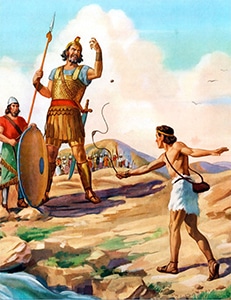
It’s sort of like the David and Goliath story which is almost always misunderstood as an underdog who got severely lucky, but is actually about a perceived underdog who knew his enemy, was creative and played to his strengths, and fought in a way that gave him a distinct advantage.  David came to a sword fight, not with a sword, but with a sling he could cast yards away.

And against the Goliath of BIG MONEY, we too can raise up all the “little guys” of men and women who are passionate about the kind of issues that matter.  And this gives me hope.

Ron Trimmer is pastor of Hope United, a new church in Georgetown, Texas. Click here to visit Hope United’s website.

Friday, May 30, 2014

I Speak for the Trees!


Though Earth Day was more than a month ago, I felt moved to talk about Creation Care, about good earth stewardship.  I’ve always been a bit of a tree hugger.  I was active in environmental groups during college, and I even fought against corporate pig farms in Iowa several years ago.  It’s simply that I care about our earth and all of our earth’s many life forms, and I care about future generations.  I stand with the Lorax (thanks Dr. Suess!), who defiantly and prophetically says, “I speak for the trees!

Why do I care?  I care because of my faith and because God cares for all the earth.  I care because we are instructed to care by God’s Word.  Our Creator has blessed us in so many ways, and the Lord has asked us to be good and faithful stewards (managers) of Creation.  We have a covenantal responsibility to care for the earth.

In the first creation story, after God created the heaven and earth, the Lord places Adam (literally earth creature) in the garden to work (literally serve) the earth and take care of it.


"In the day that the Lord God made the earth and the heavens, when no plant of the field was yet in the earth and no herb of the field had yet sprung up—for the Lord God had not caused it to rain upon the earth, and there was no one to work (literally serve) the ground; but a stream would rise from the earth, and water the whole face of the ground— then the Lord God formed Adam (literally Earth Creature) from the dust of the ground (Adama), and breathed into his nostrils the breath of life; and the man became a living being. And the Lord God planted a garden in Eden, in the east; and there he put the man whom he had formed. Out of the ground the Lord God made to grow every tree that is pleasant to the sight and good for food, the tree of life also in the midst of the garden, and the tree of the knowledge of good and evil. … The Lord God took the man and put him in the garden of Eden to work (literally serve) it and take care of it."  -Genesis 2:4a-9, 15


Creation is not just a collection of resources, something we, as human beings, can do with as we please.  This world and all her blessings do not exist simply to serve our needs.  In fact, our faith tells it’s the other way around.  If anything, we are called to serve creation and ultimately the purpose, namely God, behind her.

The Lorax has always been a kind of prophet for me, calling us human beings back to our sacred covenant and what our faith should be about.

“Mister!” he said with a sawdusty sneeze,
“I am the Lorax, I speak for the trees.
I speak for the trees, for the trees have no tongues,
and I’m asking you, sir, at the top of my lungs’—
he was very upset as he shouted and puffed—
“What’s that THING you’ve made out of my Truffulla tuft?”


Qwatsinas (Hereditary Chief Edward Moody) of the Nuxalk Nation seemed to have some Lorax in him when he said, “We must protect the forests for our children, grandchildren and children yet to be born. We must protect the forests for those who can’t speak for themselves such as the birds, animals, fish and trees.”

And an ancient Native American proverb: “Treat the earth well: it was not given to you by your parents, it was loaned to you by your children. We do not inherit the Earth from our Ancestors, we borrow it from our Children.

Creation, taking care of the environment, being a good and faithful steward of this wondrous gift we have been given in planet earth—it all comes down to responsibility, about realizing it’s not all about us in this moment in time, but that we need to think about the future, about our children’s future and their children’s future.

I’ll end by quoting once again from the Gospel of Dr. Seuss.
And all that the Lorax left here in this mess
was a small pile of rocks, with the one word … “UNLESS.”
Whatever that meant, well, I just couldn’t guess.

That as long, long ago.
But Each day since that day
I’ve sat here and worried
And worried away.
Through the years, while my buildings have fallen apart,
I’ve worried about it
with all of my heart.

“But now,” says the Onceler,
"Now that you’re here,
the word of the Lorax seems perfectly clear.
UNLESS someone like you
cares a whole awful lot,
nothing is going to get better.
It’s not.
 
I recently became active in a new faith-based environmental group called the Interfaith Eco-Network.  Come join us as we work to help our planet and care for God’s creation.  Their next meeting is June 12 at 7pm at First United Methodist Church.  Click her to visit the Interfaith Eco-Network website.


Ron Trimmer is pastor of Hope United, a new church in Georgetown, Texas. Click here to visit Hope United’s website.

Saturday, May 17, 2014

No Place for Hate


Today, I’m writing to support one of the members of my church, Hope United, who was the victim of hate.  During prayer time last Sunday, she shared that the word “faggot” was written in front of her home in chalk.  Such hateful actions are very distressing and hurtful.  She was obviously shaken by the event, and asked the prayers of our community to help her manage her feelings.  There is no place for hate!

Blessed are you when people revile you and persecute you and utter all kinds of evil against you falsely on my account. Rejoice and be glad, for your reward is great in heaven, for in the same way they persecuted the prophets who were before you.” –Matthew 5:11-12

Austin Gay Pride Parade 2013
I started Hope United almost 4 years ago to be a safe haven for folks who have experienced this very kind of injustice.  Not only do I believe in God’s unconditional love, but also I believe that our Lord does not make mistakes when it comes to the creation of human beings, who are all made in the image of God.

This Sunday I’ll be preaching on John 17 where Jesus asks that his disciples be one with God, to have the same kind of loving, intimate, trusting relationship with our Creator as Jesus had with his heavenly Parent.  Not only are some of us blessed to experience that kind of love from our earthly parents, but many of us also experience it with the person we marry, our life partner.  To deny this kind of love to anyone just because they happen to fall in love with someone who is of the same gender is wrong, and I believe, wrong in the eyes of God.

But even if you do not share my view that two people should be able to love each other regardless of their gender, there is no place for hate!  I do my best to respect the beliefs and opinions of others.  It’s tough to do some days, but I know we each come from different places, and that God loves everyone.  But by the simple virtue of our common humanity, I do my best to recognize the dignity of all human beings.  And more than that, as a follower of Christ, I believe we are called to go even beyond mere toleration but to actually offer love, even to those who hurt us.

Austin Gay Pride Parade 2013
I give you a new commandment, that you love one another. Just as I have loved you, you also should love one another. By this everyone will know that you are my disciples, if you have love for one another.” –John 13:34-35

We certainly prayed for the member of our church who was most affected by this hate, as well as pray for understanding and an end to prejudice and hate. But we also prayed for the perpetrator(s) of the crime, that our loving God may sow the seeds of understanding and love so that we might all move closer to God’s Kingdom.

Ron Trimmer is pastor of Hope United, a new church in Georgetown, Texas. Click here to visit Hope United’s website.

Sunday, May 11, 2014

A Mother's Love


On this Mother’s Day, I give thanks for all those loving mothers and the selfless, unconditional love they offer their children.  For those lucky enough to be blessed with a loving parent, it is truly a gift from God to be nurtured in a loving environment, one we often take for granted.  But more than that, our own experiences of a loving parent help us to understand the unbelievable love of our Heavenly Parent, who loves us more than anything and wants so much to be close to us.

One of my strongest memories of my own mother is from Christmas.

I remember it clearly.  When I was about 8, I would get up so early that often the sun had yet to rise, and I would sneak out to the living room to look and see what Santa had brought.  As children, we were allowed to open the small presents in our stocking, but had to wait for the rest of the family before opening up the other presents.  I would thoroughly look over all the presents, delicately scanning them all to see if any gifts could be deduced.  There were always things that I really wanted, and I would always hunt for those special gifts.

Since I was the youngest and my sisters were 5 and 7 years older than I, the Christmas morning gift exchange was not as important to my sisters—they were teenagers, and even Christmas morning couldn’t get them out of bed.  But I was persistent, and I nagged, and I did my share of making loud noises to “encourage” them to get up.  And finally, all dressed in our pajamas and sweat pants, we would circle the tree (my parents both having full cups of coffee) and begin the gift exchange.  And that was when the magic came, and when I witnessed the spirit of God.


Jan and Ben
Although I am as much a part of our materialistic culture as anyone is, and I admit I do like to receive gifts, what I learned those Christmas mornings has been more of an influence in my life than anything else.  I was lucky enough, or at least spoiled enough, to receive a number of gifts from my parents and from Santa.  Even though I remember some of the things I got on Christmas morning, my strongest memory is of my mother.  When she would give one of her children a gift, I would watch her face.  If you could only see how her face lit up as her child opened the gift.  It was beautiful—the love coming out of her, the perfect, selfless love.

On this Mother’s Day, I pause to give thanks for the gift of love from a loving parent. But more than that, I am deeply thankful for the lessons of love which taught me about the great and wondrous love of my Heavenly Mother. 

Many have asked for an update on Jan. Jan is doing absolutely wonderful with her fight with cancer. The girl has it beat! The markers in her blood for cancer were in the 450s the day of her surgery. After her surgery they went down to the 50s, and then with the heavy-dose regiment of chemo, her latest number was a 3!!! Praise God! The doctor said he’s never seen lower than a 2. Not only is the chemo working, but Jan is tolerating it like a champ. She seldom has nausea, no mouth sores, and is still very active. She does get a bit tired, but with some naps during the day, she is fine. We are thankful she was able to take off this semester of teaching, for we believe it has been a tremendous help, giving Jan time to rest and recuperate and heal. Thanks for all the prayers! They have been working! Jan has one more treatment left, and then in a few weeks a scan and doctor visit. Please join us as we pray that Jan will be completely cancer free!
 
Ron Trimmer is pastor of Hope United, a new church in Georgetown, Texas. Click here to visit Hope United’s website.

Friday, May 2, 2014

Finding Life


This week I rented Dallas Buyers Club.  I didn’t know much about the film, except that it had something to do with AIDS and that Matthew McConaughey won an Academy Award for Best Actor.  If you have not seen the film, the following may be a bit of a spoiler, but I did find a redeeming theological theme running through the movie, which I felt moved to comment on.


The story revolves around Ron Woodroof who ends up contracting HIV and then AIDS through unprotected sex.  This guy is something else, and it’s hard not to have a bit of judgment on his hedonistic lifestyle choices.  Living in Texas and an electrician by trade, everything about him screams “white trash”—the jokes he tells with his friends (as well as his language and every other word out of his mouth starting with F---), his prejudice against “faggots,” his involvement in Texas Rodeo, his sexual involvement with multiple partners, the drugs, the booze.  And everything is done to the extreme.  There’s no moderation for this guy.


We get a peek into his character early on.  He gets a friend to ride the bull in a rodeo, betting heavily that he will make the 8 seconds.  And when he loses, rather than pay his debts, he runs as a group of angry cowboys give chase.  He only escapes by running into the arms of a policeman—a friend of his.  When the cop won’t help him, he decks his friend so he’ll be taken into custody.  Dishonest, prejudiced, unwilling to take responsibility for his actions or behavior, a slave to his hedonistic desires—Ron Woodroof is not what I would call the best example of humanity (Lord, forgive my judgment!), all perfectly portrayed by actor Matthew McConaughey.


After a work-related accident, Ron finds himself in the hospital and is given the news that he is HIV positive with a full blown case of AIDS.  Not only that, he will likely die in 30 days.  30 days!


Ron’s first reaction is one of denial and escape—it’s a mistake, no way does he have that “faggot disease,” and so he gets drunk and high.  But nothing can keep him from sliding into that pit, and with the growing realization that his days are numbered, he resolves to fight for life.  He starts by educating himself about the disease, possible medications, even drug trials around the world.


Say what you will about his moral character at the beginning of the film, one thing I immediately admired in the character of Ron Woodroof is his will for life, the sheer tenacity of his determination to live.  He learns about the new and controversial AIDS drug AZT still in the trial stage; he bribes a hospital employee to get it, and starts taking it.


One can see his health declining.  As you might imagine, his redneck friends are not the most understanding, so he loses whatever kind of supporting care group he had.  And when his way of getting AZT dries up, he heads to Mexico to a doctor in a shabby clinic who informs him of the toxic nature of AZT and that there are other options.  First off, he has to take better care of himself.  All the booze and drugs and lewd living is overburdening his immune system, and there are vitamins and supplemental medications that may strengthen his ability to live longer.  Unfortunately, it is not easy to acquire all of these supplements, some require a doctor’s prescription, and many are not FDA approved.  But Ron will not let a little thing like legality or bureaucracy stop him from grabbing at whatever straws are left available to him when it comes to life.


But as Ron fights for his own life, he realizes that many others in the same situation are just as desperate to live.  And so, with a trunk load of medicines from Mexico and the help of a cross-dressing gay man, he starts the Dallas Buyers Club.  For $400 a month membership, you get access to all the drugs and vitamins you need to help you live with AIDS.


Certainly, our unsavory “hero” is motivated by greed.  One could call it opportunity, but he recognizes a need and helps fulfill that need.  This prejudiced, redneck man ends up helping the very people he found so distasteful at the beginning, and it’s not like he gains a lot respect for their humanity, at least not at first.


But here is the piece that most moved me about the story.  Through his work, his advocacy for access to these drugs and vitamins, his tussles with the FDA, his travels over the world, his growing clientele of mostly gay men, he ends up doing something extraordinary … he gives hope.


God is able to use this unlikely, and I might even say despicable man, to do some good, to help people, and to give folks hope.  Through the movie, as the FDA bears down on him and he finds it harder and harder to get the drugs to help people, it becomes less about making money and more about giving people a chance at life.


And through it all, Ronald Woodroof finds life.  His life takes on meaning, and it’s because somehow God has tricked him into finding his calling to serve, to help, to give hope.


The most telling scene of this is when Ron returns from a trip to the courts where he was fighting for access to these drugs and vitamins.  Though he lost the fight, the community that was the most invested in the decision, those who suffer and work with those with HIV and AIDS, gives him a standing ovation.  Up to this point, it’s like Ron didn’t realize his life-giving work, but the smile on his face and the way he is embraced and celebrated shows the transformation of his life.


In many ways, the story reminded me of the calling of Matthew.  As you recall, Matthew was not the best example of humanity either—a tax collector, someone despised by his own people, who collaborated with the Romans in collecting money from the Jews.


As Jesus was walking along, he saw a man called Matthew sitting at the tax booth; and he said to him, “Follow me.” And he got up and followed him.
10 And as he sat at dinner in the house, many tax collectors and sinners came and were sitting with him and his disciples. 11 When the Pharisees saw this, they said to his disciples, “Why does your teacher eat with tax collectors and sinners?” 12 But when he heard this, he said, “Those who are well have no need of a physician, but those who are sick. 13 Go and learn what this means, ‘I desire mercy, not sacrifice.’ For I have come to call not the righteous but sinners.” -Matthew 9:9-13


My point is that Ron Woodroof not only was able to extend his life and the life of others through his work with the Dallas Buyers Club, it’s that he found life, what life is really about.  Whether we realize it or not, it is this depth of meaning we often seek in our lives, and when we give ourselves over to the work of hope, to helping and serving others, we are better able to discover our God-given purpose in life and thus find the life we’ve been searching for.


Ron Woodroof wasn’t the best example of humanity, but then again, who is?  I’m certainly not!  Let us take a lesson from Jesus, try our best not to judge, and to embrace the life-giving work of helping, caring, and giving hope.


Ron Trimmer is pastor of Hope United, a new church in Georgetown, Texas.  Click here to visit Hope United’s website.

Wednesday, April 9, 2014

Praising God


       Psalm 100
1Make a joyful noise to the Lord,
     all the earth.
2Worship the Lord with gladness;
come into his presence
with singing.
3Know that the Lord is God.
It is he that made us,
and we are his;
we are his people,
and the sheep of his pasture.
4Enter his gates with thanksgiving,
and his courts with praise.
Give thanks to him, bless his name.
5For the Lord is good;
his steadfast love endures forever,
and his faithfulness to all generations.

Today, we have Psalm of Thanksgiving or Hymn of Praise.  As you might imagine, many of our psalms fit this category, and Psalm 100 is a short, elegant poem steeped in theological implications as it informs us the essentials of praise.

First, please note that the psalmist uses seven verbs to begin the phrases that invite us to praise the Lord.  Seven is one of those magic numbers in the Bible.  We talk about the seven days of creation.  Seven denotes completeness.  If this is a psalm that tells us how to praise God, by using exactly seven verbs, the psalmist is trying to tell us this is what you have to do, this explains it all, this is what it means to praise God—do these seven things, leave nothing out, then you will get it right.

A Make
B Worship
C Come
D Know
c Enter
b Give thanks
a Bless

Make a joyful noise: jubilant cry of celebration, acknowledging God as sovereign, as Lord; note that God claims all the earth, not just Israel.

Worship the Lord with gladness: in Hebrew, the word worship, literally means to serve, or be a slave to; to worship God means to serve God; again to acknowledge Lord as master, sovereign

Come into his presence with singing: come into his sanctuary

Know God.  By placing “know God” in the center of the Psalm, the writer adds emphasis.  This is focus of the psalm and what it means to praise.  To know someone, in the Biblical sense, is to know them intimately, and the word often is connected with sexual intercourse.  So knowing God is about intimacy, about a personal relationship, about love.  To know God is to know that God made us; we are the Lord’s—we are God’s children; we belong to the Lord, like sheep belong to a shepherd.

Enter his gates with thanksgiving, and his courts with praise: enter sanctuary again—this is where God’s business is conducted, God’s justice, where the Lord is worshiped and served

Give thanks to him: not only an act of gratitude but a public acknowledgement of loyalty—you are showing who your heart belongs to

Bless his name: an act of assigning God the capacity for well-being.  We do something similar every time we say Lord’s Prayer: “Thy will be done.”

Note the processional quality of the hymn
Note the connections between A and a, B and b, C and c (similar verbs)

The last verse of the psalm sums up the reasons for praise:

God is good
God offers steadfast love (hesed, sometimes translated mercy)
God is faithful

This is who God is.

So what does this say to us?

First off, you have to worship God.  God wants us to worship him.  Do you think the psalmist thinks you can be Christian by simply praying or getting away to nature?  I don’t need the church; I can be Christian without going to church.”  Absolutely not.  As followers of God, we must gather to praise him—worship is very important.

To praise God is to worship him, to serve him, to know him.  All that we do, all that we are, must testify to the glory of God.

At the heart of this psalm is that to praise God means to have that intimate, personal relationship with your savior.  The psalm talks of having a complete dependence on God, but also a complete trust.

Ron Trimmer is pastor of Hope United, a new church in Georgetown, Texas.  Click here to visit Hope United’s website.

Wednesday, April 2, 2014

God's Anointed


Today we will look at Psalm 72, a Royal Psalm, and consider what it means to rule as God’s Anointed. Here the psalmist asks God to bless the king of Israel, to offer the king guidance and support. The psalm also reminds the king of his/her responsibilities with the promise of a continued presence. But even though these royal psalms sometimes take on a kind of “political propaganda” slant, they still remind us what God expects from God’s anointed.  Indeed, sometimes these psalms even remind us of what will happen if Israel (or any nation for that matter) does not follow the way of the Lord.  God will anoint a king to rule over Israel, but that king is answerable to God.  The king of Israel must fulfill God’s will for Israel.  The king of Israel must care about those issues that God cares about.  And if the king doesn’t—well, then the kingdom will fail.  Wise words, although presidents and kings may not like to hear them, for the Lord will have God’s justice.


1Give the king your justice, O God,
   and your righteousness
   to a king’s son.
2May he judge your people
   with righteousness,
   and your poor with justice.
3May the mountains yield
   prosperity for the people,
   and the hills,
   in righteousness.
4May he defend the cause of
   the poor of the people,
   give deliverance to the
   needy, and crush
   the oppressor

What are the things God wants to see from God’s anointed king?  From the nation of Israel?  What did you hear?

  • Justice
  • Righteousness
  • Concern for poor—justice again.
  • Mountains yield prosperity (or peace); hills righteousness
  • Defend cause of the poor
  • Deliver the needy
  • Crush the oppressor

Is it starting to sink in what this king, God’s anointed must be about?  Justice and caring for the little guy?  God has always held a special place in God’s heart for the poor, for the widow and the orphan; the Lord told the people not to oppress the alien, for they were once aliens.

And here’s the thing: the king must be concerned about such matters—about the poor, about justice, about making sure there is fairness and that no one is left without.  God’s anointed must ensure that no one is in need, that the blessings of God are shared with equity, with justice.  And if the nations of the world do not care for the most vulnerable, if they turn a blind eye to the needs of the poor and downcast, if they neglect the widow and the orphan, then they are answerable to God and God will step in to establish justice, even if God has to move against God’s own people.  Even Israel is not above the law of the Lord.  Even those nations who claim to be “God fearing,” if their practices are not in line with what God wants, they will fall.

In the book Rise and Fall of the Great Powers, author Paul Kennedy comments on the rise and fall of superpowers (Portugal, Netherlands, Great Britain) from 16th century to present day.  And his thesis is basically this: Every nation has just so much population, territory, and chemical resources to work with and to keep in balance, and if the nation militarily over-extends themselves, then the great power disappears.  It has happened to every superpower.  Whenever you get too swept up with military conquests and protecting your national interests, whenever you are motivated by greed and profit, then you are doomed to fail.

Although it is interesting to look at history, for although we often fail to learn from history and thus repeat it, there is an even more important source of guidance.  It’s the Word of God, and over and over again, God reminds us that if a nation is not concerned about justice and about caring for the least fortunate, if a nation gets wrapped up in itself, neglecting the widow and the poor and the orphan, it will fail.

Dr. Walter Brueggemann, from a lecture on the three prophets Isaiah, Jeremiah, and Ezekiel, reminds us that superpowers like to think of themselves as the ultimate power in the universe.  It’s very easy to do.  Indeed, often nations even with the most noble and God-fearing intentions, with the rise of success and wealth and power, begin to think of themselves as outside the normal rules of justice and fairness.  This has happened many times throughout the history of Israel, and every time, God called them to accountability.

Although powers think of themselves as the ultimate power, they must remember—they must remember that God is the ultimate power.

Even the United States is not above the Lord’s justice, and we must never forget that, although, sadly, I must confess, I believe we already have.   

But let us put our trust in the Lord, for God is the one who is the ultimate power in the world and in our lives, who will see justice established and the poor taken care of.

The Lord is pouring God’s Spirit upon us, anointing us for God’s work: to establish justice and help the downtrodden, to work for a society that takes care of the least fortunate.

As the Psalmist tells us in verse 12 of God’s anointed:

12For he delivers the needy
     when they call,
     the poor and those
     who have no helper.
13He has pity on the weak
     and the needy,
     and saves the lives
     of the needy.
14From oppression and violence
     he redeems their life;
     and precious is their
     blood in his sight.

God cares about justice, about equity, about helping folks who cry out for deliverance.  It is in God’s nature to bring salvation.  Let us trust in the Lord, our true sovereign.

Ron Trimmer is pastor of Hope United, a new church in Georgetown, Texas. Click here to visit Hope United's website.